

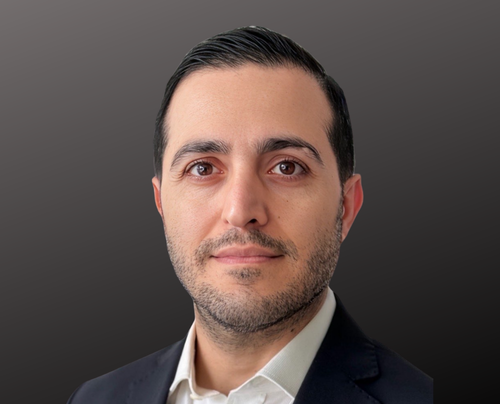
For Morteza Mehdizadeh, international trade has never been only about transactions.
From the beginning of his career, he was drawn to the idea of connecting markets, cultures and people across borders.
What interested him most was the complexity of the field and the way economics, regulations, business relationships and cultural understanding all come together.
“I saw international trade not merely as the exchange of goods, but as a mechanism for knowledge transfer, cooperation, and shared prosperity.”
That perspective has shaped a career spanning more than a decade of complex import and export operations, market-entry strategy, trade finance and cross-border partnerships.
It has also shaped the way Morteza views the Certified International Trade Professional (CITP) designation. For him, earning the CITP isn’t simply recognition of what he has accomplished. It represents a commitment to how international trade should be conducted.
Building a career around global connection
Morteza was attracted to international trade because it offered something few other professions could: the opportunity to work across multiple systems, geographies and cultures at once.
“That complexity fascinated me,” he says. “I chose this path because it offered the opportunity to work globally, learn continuously, and tangibly contribute to economic development.”
Over time, that interest developed into a broader belief in the role trade can play in creating opportunity.
Morteza sees well-executed international commerce as a tool that can do more than create business growth. When approached responsibly, he believes it can contribute to knowledge transfer, employment and stronger economic relationships between regions.
That philosophy became increasingly important as he began building and leading his own international trading company.
Through Vanda Global Trade Ltd., Morteza has managed complex import and export activities across Europe, Asia and the Middle East. He’s worked to establish exclusive agency and distribution partnerships with European manufacturers, executing high-value industrial machinery and petrochemical transactions, and developing market-entry strategies for new regions.
Just as importantly, he has designed the logistics and trade finance structures that sit behind those transactions, structuring payment terms, financing and delivery arrangements to reduce costs and manage risk before problems arise.
Yet some of the experiences that have stayed with him most are not defined by the size of the transaction. They are the moments when business depended on trust.
When solving the problem matters more than winning the dispute
One experience in particular reinforced Morteza’s belief that technical knowledge alone is not enough to succeed in international trade.
A serious quality dispute had emerged between a European buyer and a petrochemical manufacturer over the quality and packaging of a bulk petrochemical material shipment. The disagreement threatened a long-standing commercial relationship.
There were contractual avenues available, but Morteza chose a different approach.
He travelled internationally to meet the parties in person, helped facilitate transparent technical discussions, bringing the technical teams on both sides together to examine the quality and packaging issues openly rather than trading accusations at a distance, and worked to shift the conversation away from short-term blame and toward preserving the long-term relationship.
The partnership survived.
This experience captured what international trade often demands in practice.
“Some of my most meaningful experiences have come from moments where trade required more than technical knowledge. It required trust, cultural understanding, and leadership.”
It also reinforced a principle that has guided his approach throughout his career.
“International trade is fundamentally a people-driven profession.”
That does not make contracts, regulations or commercial discipline less important. Morteza sees relationships and technical expertise as inseparable.
When problems arise across jurisdictions, cultures and organizations, trust can determine whether the parties work toward a solution or allow a commercial relationship to deteriorate.
Thinking beyond the individual transaction
Years of managing complex international business have also changed the way Morteza defines success. He is proud of the commercial results his work has produced, but he is equally focused on what remains after a transaction is complete.
“What makes these projects meaningful is not just their commercial success, but also their long-term impact,” he says.
That impact has included creating employment, transferring knowledge and building international partnerships capable of lasting beyond a single deal. It’s also why Morteza advises trade professionals to resist the pressure to focus only on speed.
“International trade rewards patience, preparation, and integrity far more than speed.”
Early in his career, he learned that a successful transaction depends on understanding the full environment surrounding it. Legal frameworks, financial risks, regulatory requirements, cultural norms and long-term commercial relationships can all shape the outcome.
“If I could offer one piece of advice, it would be to always think long-term and build trust before pursuing growth.”
In practice, that means visiting partners in person early in a relationship, being transparent when problems arise, and doing the unglamorous due-diligence work before a deal is signed, because trust built in advance is what makes difficult conversations possible later.
For professionals entering the field, he recommends investing as deliberately in relationships and ethical decision-making as they do in technical knowledge.
“When trust is established, even the most complex challenges become manageable.”

Why the CITP stood out
Those values played a major role in Morteza’s decision to pursue the CITP designation.
Beyond the value of the certification itself, he wanted to join a professional community that reflected the standards he believed should guide international commerce.
“I chose to apply for the CITP designation because I wanted to be part of a professional community that represents the highest standards of expertise, integrity, and responsibility in international trade.”
For Morteza, the designation’s emphasis on professional ethics and competency was particularly important. After years of working in complex commercial environments, he had seen firsthand how much depends on sound judgment. Trade professionals regularly make decisions involving financial risk, regulatory obligations, cross-cultural relationships and competing business interests.
“The CITP designation represents not only professional recognition but also alignment with a shared mission to make international trade a force for positive global impact.”
That sense of shared purpose is one of the key advantages Morteza sees in joining the CITP community. The designation connects him with professionals across sectors and markets who bring different perspectives and areas of expertise, while operating within a common professional framework.
Earning the designation brought a sense of responsibility
When Morteza earned his CITP designation in January 2026, the achievement prompted reflection on more than his career progression. It strengthened his sense of responsibility as an international trade professional.
International trade is increasingly shaped by new technologies, data-driven decision-making and evolving global risks, from regulatory shifts to supply chain disruption. Morteza believes professionals need to embrace those tools while maintaining fairness, transparency and sound judgment.
For him, the CITP reinforces the importance of balancing innovation with professional responsibility.
He also naturally sees the designation as a signal of credibility. In a field where businesses often have to establish trust across jurisdictions, cultures and organizations, recognized professional standards can help provide confidence in the expertise and conduct of the person on the other side of the table.
Using the CITP as a platform for continued leadership
“I see the designation not as an endpoint, but as a powerful platform for continued learning, collaboration, and leadership in global trade.”
His long-term goal remains the same: to contribute to sustainable trade, ethical decision-making and shared prosperity across markets.
The designation strengthens that work by connecting him to other experienced professionals and giving him access to a broader range of perspectives and expertise.
“Being part of this professional network provides valuable access to peer insight, diverse perspectives, and collective expertise.”
That network can be especially valuable as international business becomes more complex. Navigating regulatory change, shifting markets and emerging risks often requires knowledge that extends beyond any one individual or organization.
For Morteza, being part of the CITP community creates more opportunities to learn, collaborate and make better-informed decisions. This is an outlook consistent with the philosophy that first attracted him to international trade.
After more than a decade of building partnerships, managing complex transactions and connecting businesses across regions, Morteza remains focused on what trade can accomplish when it is conducted with patience, expertise and integrity.
LinkedIn: Morteza Mehdizadeh, CITP




disqus comments